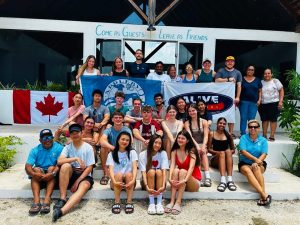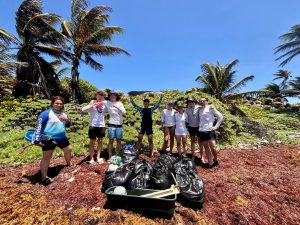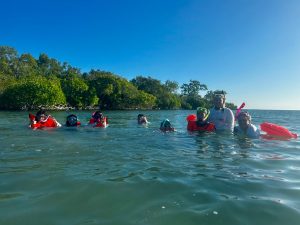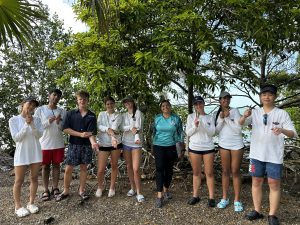

Today was a special day learning about the fishing culture in Sarteneja through a pescatour, making lionfish jewelry, as well as making traditional tamales. We started the day with a pescatour, boating to a nearby beach trap where we learned about the importance of this practice to the local economy. One cool fact we learned was that it is illegal to sell or create more of those traps and it can only be passed down through generations. We had a chance to assist with measuring, weighing, and identifying the fish, while observing the art of traditional Belize fishing. It was a tremendous shock for us to see the unique species of fish that are not found on Canadian shores, such as barracudas, snook, and 50 blue crabs! We then had a wonderful workshop where we assisted in dissecting a striped palometa for recording traditional fishing statistics. We learned how to spot the sex, the age, and organs of the fish, which led us to better understand the overall health of the ocean organisms.
For lunch, we joined a local family in the village of Sarteneja, where they hosted us. We learned techniques to fillet and descale the fish in preparation for consumption. It was a delicious traditional Belizean meal made up of fried fish, rice, mashed potatoes, and diced tomatoes. To go with it, we were served a special beverage made out of rice milk and spices that tasted like cinnamon – horchata. We are especially grateful for their involvement in our travels as it provided valuable insights into the traditional lifestyle of Belizeans.


In the afternoon, we learned about the invasive species of lionfish and the history behind them. Originally from the Indian Ocean, they were kept in aquariums around the world. When a devastating hurricane hit Florida in 1992, the aquariums were destroyed and the lionfish were accidentally released into the Atlantic. Another cool fact that we learned was that they can reproduce every 3-5 days (most fish reproduce once a year!) with up to 50,000 eggs per cycle, so they had quickly taken over the ocean with no predators in the area to control them.
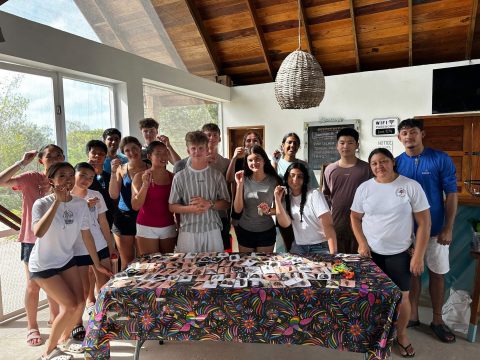
The organization Belioness was established to counter this issue. It started as a group of women who noticed their fisherman husbands were struggling to catch local fish due to the overpopulation of this invasive species. They showed us their talents of jewelry making from lionfish fins and had us join them in making our own creative pieces. We found that the organization pushed for ecological, economic, and environmental change and were able to better their community. This innovative initiative has inspired us as women to push for change in our community.
Our final activity for the day included visiting another family in the village that welcomed us with open arms. We were able to learn the local techniques of cooking a traditional dish called tamales. They also showed us their glorious backyard of mango trees and many new ways to enjoy them. The tamales were made with a cornbread shell, a delightful gravy sauce with shredded chicken and vegetables, all wrapped in plantain leaves and boiled over a fire. There was also a vegetarian option that was equally as yummy!
Overall, from the insights and experiences we gained today, we were able to build our understanding of Belizean culture and immerse ourselves deeper into their community.